Should Your App Use a Decision API Instead of an LLM?
Google's new Gemini Decisions API answers up to 1,000 yes/no, multiple-choice and rubric questions in one call for $0.10 per million input tokens and no output charge. Here is when a decision model beats a chat model in your app, and when it does not.
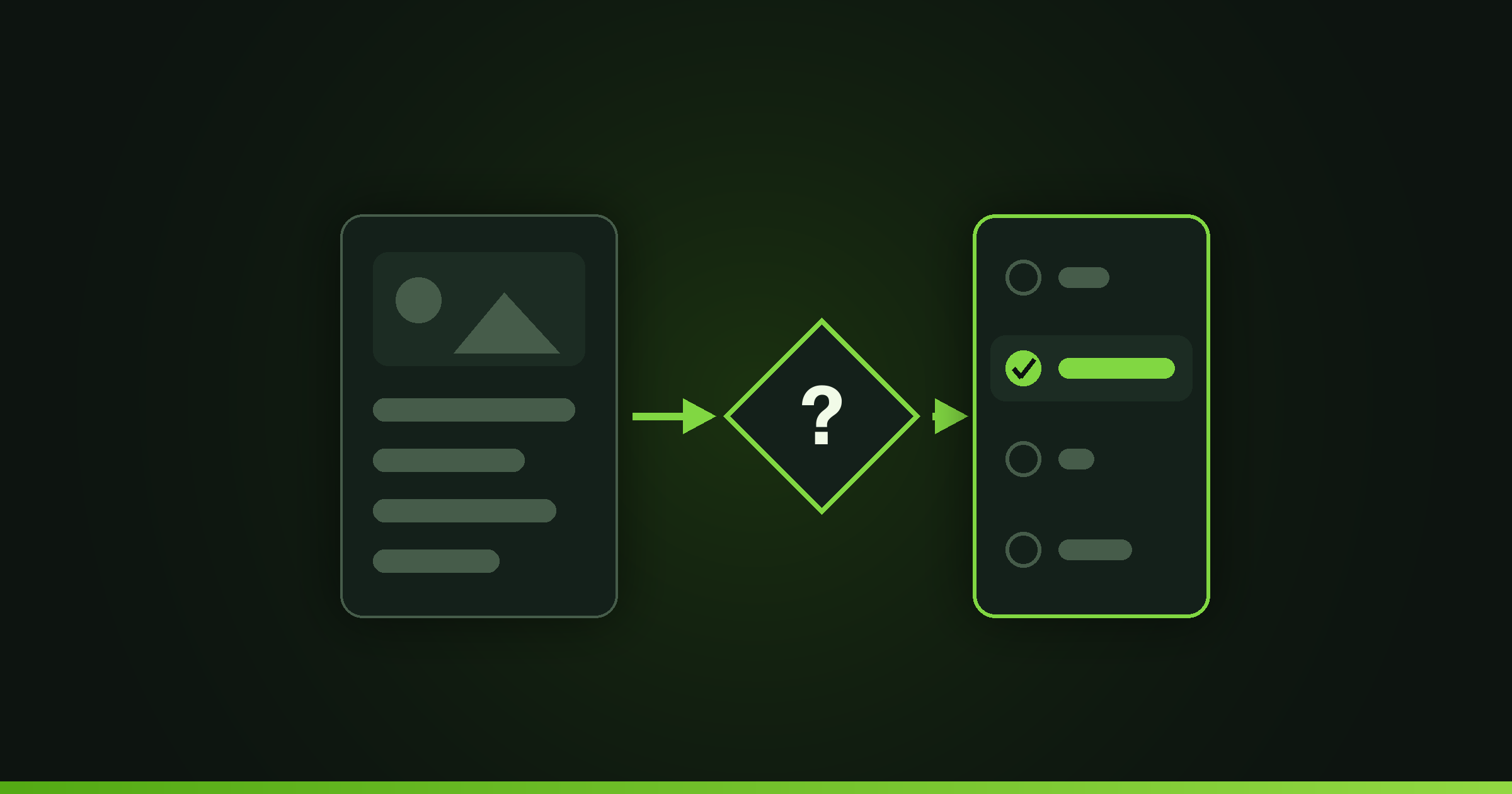
If your app asks an LLM a question with a fixed set of answers, such as "is this ticket urgent?", a decision API is probably cheaper and faster. Google's Gemini Decision 1 scores up to 1,000 such questions in one call for $0.10 per million input tokens, with no output charge, in about 150 to 250 milliseconds.
What is a decision API?
A decision API is a model endpoint that picks from answers you define instead of writing text. Google launched the Gemini Decisions API in November 2026, running on a new model called Gemini Decision 1 (gemini-decision-1). According to Google's announcement, the model does not generate an answer token by token. It scores every candidate option in a single forward pass and returns probabilities and a confidence score between 0 and 1.
It supports three question types, which can be mixed in one request:
- Yes/no: the probability that a condition holds, with optional criteria for what counts as true or false.
- Multiple choice: between 2 and 255 options, returning the winner and a normalised probability for each.
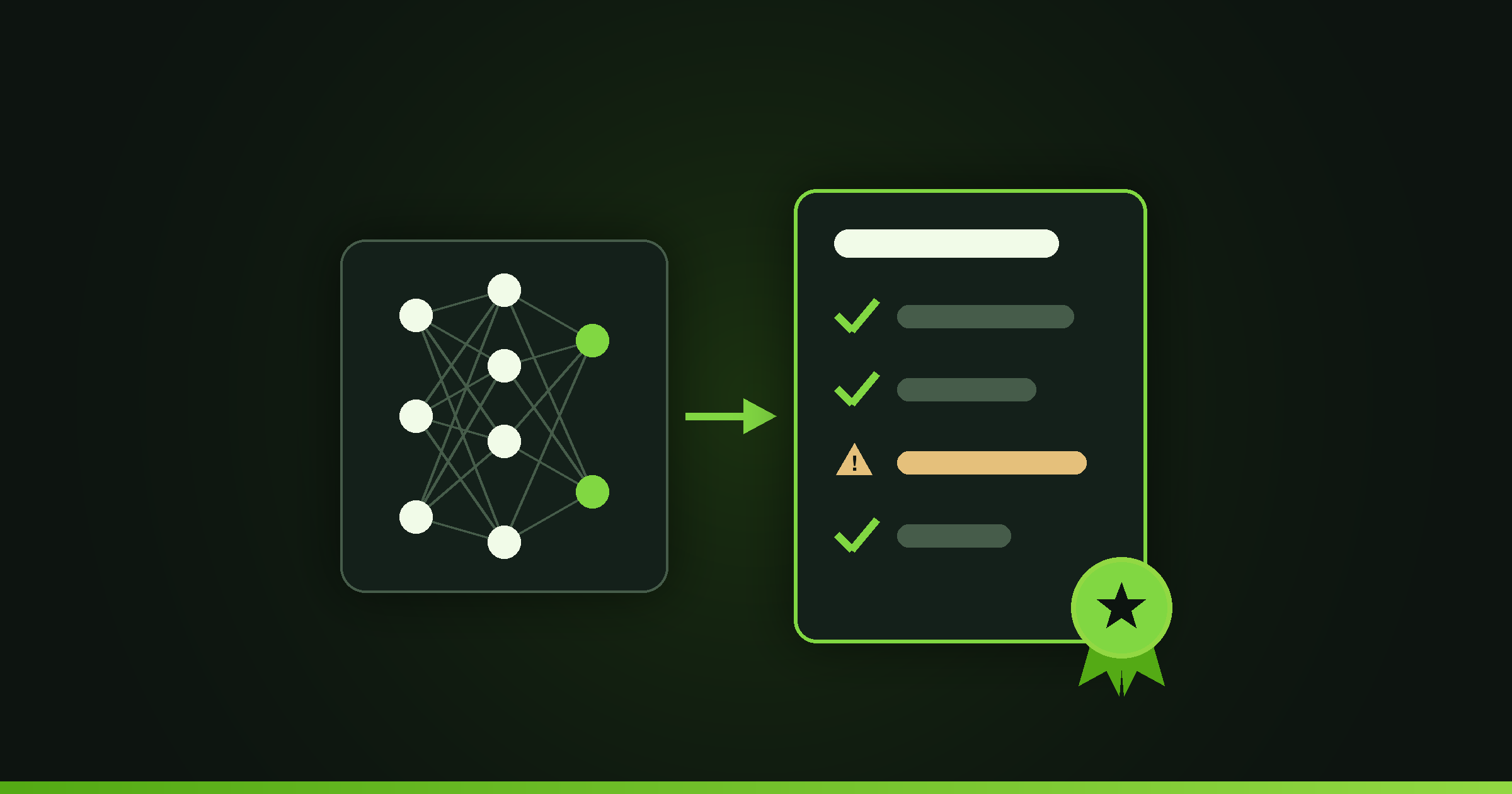
- Rubric: ordered levels starting at 0, returning a weighted score and a probability per level.
The input can be text, images, audio, video or PDFs, up to 256K tokens, and transcription and OCR are included at no extra charge. Google is not alone. Dataconomy's coverage lists OpenAI's Decisions API on GPT-6 Luna (up to 400 questions per request), TypeSafe's Jev 1.14, and Amazon's open-source Strands Decider 2B as competing products in the same category.
How much cheaper is it than asking an LLM?
For many-checks-per-record work, the difference is large. Gemini Decision 1 costs $0.10 per million input tokens and nothing for output. The shared input is billed once per request, and each extra question adds only its own instruction tokens.
Dataconomy worked through an example: a 4,000-token record checked against 20 questions of about 50 tokens each costs roughly $0.50 per 1,000 records in a single batched request. Sending the same record as 20 separate requests costs about $8.10 per 1,000 records, before any retries. Google says that across its shared benchmark suite the model was nearly five times cheaper than Gemini 3.5 Flash-Lite used through the Interactions API.
The Amazon figure is the most striking real-world number. In an internal ticket-routing workflow, Amazon reported, according to Dataconomy, that moving to Strands Decider 2B cut average call time from 4.2 seconds to about 0.9 seconds and estimated cost from $22,200 to about $500 per million tickets, compared with a Claude Sonnet 4.6 workflow. That is Amazon's own figure for its own workload, so treat it as an indication, not a promise.
Is it fast enough to sit in front of every request?
Google says yes for inputs up to 16,000 tokens: 150 to 250 milliseconds end to end, with 50 to 100 milliseconds of median model compute, and latency that barely changes between 1 and 100 questions per call. Google says its own Gemini Notebook product uses the model to route each request to the right model and reasoning level, and reports up to 40% lower latency for everyday queries as a result.
That speed is what makes a decision model useful as a gatekeeper. A routing or policy check that adds a quarter of a second is tolerable. One that adds two seconds of generated reasoning is not.
Is it accurate enough to trust?
It depends on the task, and the benchmarks do not crown a single winner. On Google's own suite, as reported by Dataconomy, Gemini Decision 1 led 5 of 7 tests across 4 models, scoring 92.2% on JevBench, and had the lowest calibration error (0.0250 against 0.0494 for Jev). It trailed Jev on Mind2Web Multimodal and on the When2Call tool-use test.
Independent results were less flattering. Artificial Analysis ranked Gemini Decision 1 ninth of 18 models on its Decision Index at launch. On its AA-Paperclip test, which counts documents where every question was answered correctly, Gemini scored 33% against 63% for Nace AI's Drex Max v1.1.
Calibration matters more than raw accuracy for most apps. A well-calibrated confidence score lets you set a threshold: act automatically above 0.9, send everything else to a person or a larger model. That is how Code4U would wire one into a production workflow.
When should a business switch, and when should it not?
Switch the calls that have a closed answer set and run often:
- Model routing: deciding whether a request needs a cheap model or an expensive one.
- Triage: urgency, category, department or language of a support ticket or form submission.
- Policy checks: does this upload, message or listing break a rule you can state in a sentence?
- Grading: scoring a document, call recording or photo against a checklist of criteria.
Keep a generative model where the output is open-ended: writing a reply, summarising, extracting free-text fields, or explaining a decision to a customer. A decision model cannot do those.
Also plan for the limits Dataconomy flags. Each question is scored independently, so if question 5 should depend on the answer to question 2, your code has to handle that, or make a follow-up request. Google Cloud support is listed as "coming soon" with no date, the API currently sits on the v1beta endpoint, and the free tier in Google AI Studio is capped at 200 requests and 50,000 input tokens per minute.
What about data privacy?
Read the terms for the tier you use. Dataconomy reports that on paid services, prompts and responses are excluded from product improvement, with logs kept for a limited period for policy enforcement. The unpaid tier allows product-improvement use, subject to regional exceptions. If you are classifying customer records, that means prototyping on synthetic data and running real data only on a paid key.
If you need the classification to stay on your own servers entirely, Amazon's Strands Decider 2B is Apache 2.0 licensed and ships with serving code, at the cost of running it yourself. SiliconANGLE reports that AWS built it on a Qwen3.5 2B base with the text-generating head replaced by a small "pointer head" of about a million parameters that scores the choices, released the weights on Hugging Face and the training scripts on GitHub, and says it runs locally, even on a laptop, in under 150 milliseconds. Code4U's earlier post on whether you can use open-weight AI models commercially covers what that licence allows.
How would you test one without rewriting your app?
Start by logging. Find every LLM call in your app whose prompt ends in something like "answer only yes or no" or "reply with one of these categories". Those are your candidates. Then:
- Take a sample of a few hundred real inputs with known correct answers.
- Run them through the decision API and your current LLM side by side.
- Compare accuracy, and look at how often the decision model was confident and wrong.
- Set a confidence threshold, and keep the LLM as the fallback below it.
Integrations are rolling out for OpenRouter, LangChain, Vercel, LiteLLM and Pydantic AI, according to Google, so if your app already calls models through one of those, the change can be small.
FAQ
What is Gemini Decision 1?
Gemini Decision 1 is a non-generative Google model, launched in November 2026, that answers yes/no, multiple-choice and rubric questions about text, images, audio, video or PDFs. It scores options in one pass and returns probabilities instead of writing text, and handles up to 1,000 questions per request through the Gemini Decisions API.
How much does the Gemini Decisions API cost?
Google prices it at $0.10 per million input tokens with no charge for output tokens. The shared input is billed once per request, and each question adds only its own instruction tokens. A no-cost tier in Google AI Studio is available for prototyping, limited to 200 requests and 50,000 input tokens per minute.
Can a decision API replace a chatbot?
No. A decision API only chooses among answers you define in advance, so it cannot write replies, summaries or explanations. It works best in front of or behind a chatbot: routing each request to the right model, flagging policy problems, or grading the chatbot's output against a checklist.
Are there open-source decision models?
Yes. Amazon's Strands Decider 2B is released under the Apache 2.0 licence with serving code and a training recipe, and supports yes/no, multiple-choice and rubric questions over text. It can run on your own infrastructure, which keeps classified data in-house, though it scored lower on public benchmarks than the hosted options.
If you want help finding which of your app's AI calls could move to a decision model, that is the kind of AI integration work Code4U does.