Can You Use Open-Weight AI Models Commercially?
Open weights do not mean open licence. A plain comparison of what DeepSeek, Nvidia, Black Forest Labs, Meta and MiniMax actually let a small business do with the models they released in October 2026.
Often, but not always. "Open weights" only means you can download the model. The licence decides whether you can sell what you build. Of the models released in October 2026, DeepSeek's V4.1-Flash-1017 uses the MIT License, Nvidia's Nemotron 3.5 family uses OpenMDW-1.1, while Black Forest Labs' FLUX 3 Image Klein is free commercially only below US$5M in revenue.
What is the difference between open weights and open source?
An open-weight model is one whose trained parameters you can download and run on your own hardware. That says nothing about what you are allowed to do with it. Some vendors publish weights under a standard permissive software licence. Others write their own licence with revenue caps, user thresholds, field-of-use limits, or rules about what you can do with the outputs.
For a business, the licence is the part that matters. Running a model locally to test it is rarely a problem. Putting it inside a product you charge for, fine-tuning it for a client, or offering it through your own API can each be allowed, restricted or forbidden depending on the terms. The licence also travels with the model: if you build on a fine-tune of someone else's model, you can inherit both sets of terms.
Which October 2026 models are the most permissive?
DeepSeek V4.1-Flash-1017: MIT License
DeepSeek released V4.1-Flash-1017 on October 17, 2026, an update to its agentic coding model. The Hugging Face repository states that "the model weights are licensed under the MIT License," and lists about 763 billion parameters. MIT is one of the most permissive licences in software: commercial use, modification and redistribution are all allowed, as long as you keep the copyright and licence notice. The repository lists no extra usage restrictions.
The practical limit is hardware, not law. A model of that size needs serious GPU capacity to self-host. DeepSeek also launched a hosted Search and Fetch API at $0.75 per 1,000 calls per endpoint, with billing starting October 31, 2026, according to its release notes.
Nvidia Nemotron 3.5: OpenMDW-1.1
Nvidia's Nemotron 3.5 Super VL, released October 16, is a 120-billion-parameter mixture-of-experts model with 12 billion active parameters, aimed at agents. Nvidia's Nemotron model information page lists OpenMDW-1.1 for the Nemotron 3.5 family and says, for the Lightning models, "Commercial use permitted, no restrictions on outputs."
Two details on that same page are worth knowing. Only the Lightning repositories commit the OpenMDW-1.1 text into the model repository itself. And Nemotron 3.5 Content Safety, a fine-tune of Google's Gemma 3, is governed by both OpenMDW-1.1 and the Gemma Terms of Use. Check each repository rather than assuming one licence covers the family.
Which licences have strings attached?
FLUX 3 Image Klein: free under US$5M revenue
Black Forest Labs open-sourced FLUX 3 Image Klein, a 5.6-billion-parameter image generation and editing model, on October 16. Its INT8 build runs on Nvidia RTX GPUs with as little as 8 GB of VRAM, according to the company's blog. That makes it one of the few capable image models a small studio can run on a single desktop card.
The licence is the FLUX Kommunity License v1.0. The Hugging Face model page says it allows commercial output generation by qualifying users "with less than US$5M in gross annualized revenue," and the threshold counts affiliates. Three conditions catch people out:
- It is not blanket permission for commercial fine-tuning or distribution of the model.
- Outputs cannot be used to improve another AI model.
- Access is gated: you must log in to Hugging Face and accept the conditions to download the files.
Above the threshold, or for uses the Kommunity licence does not cover, Black Forest Labs sells separate commercial weights licences. Its licensing page lists Builder, Platform, Professional and Enterprise tiers, and notes the Builder tier is "Not meant for client use." An agency generating images for clients should read those terms closely.
Meta Muse Spark Open: the Muse Model License
Meta released open weights for Muse Spark Open on October 15: 816 billion total parameters, 42 billion active, with a 1-million-token context window. Meta says it runs locally on two Mac Studios with M5 Ultra chips using the MLX framework, and the weights are on Hugging Face, Amazon SageMaker AI, Google Cloud Model Garden and Microsoft Foundry.
The licence is Meta's own Muse Model License, which Meta's announcement describes as having "limited commercial terms, which allow many developers to use the model for free." The announcement does not spell out the thresholds. "Many developers" is not "all developers," so read the licence itself before building a product on it.
MiniMax M3.1 Flash: not yet known
MiniMax released M3.1 Flash on October 19 through its API at $0.15 input and $0.60 output per million tokens. Its announcement says only that "model weights will be released later," and gives no licence. Until the weights and licence are published, treat it as an API product, not an open-weight one.
What should you check before building on an open-weight model?
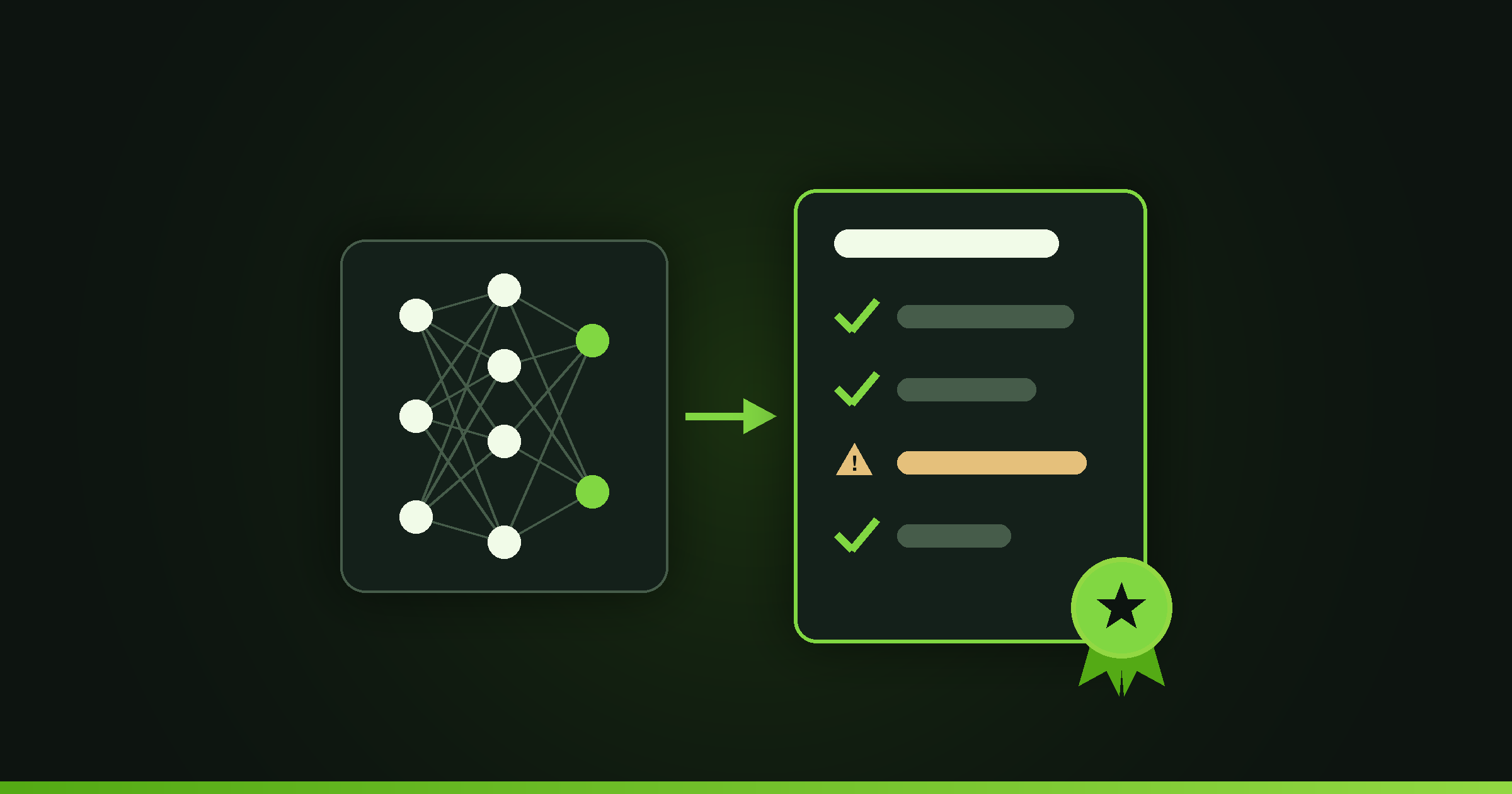
Code4U runs the same short checklist whenever a client wants to self-host a model:
- Read the licence file in the repository, not the blog post. Vendor announcements summarise. The repository licence is what binds you.
- Check revenue and user thresholds against your whole group, including affiliates, and against where the business will be in two years.
- Check output rules. Some licences restrict using outputs to train other models, which matters if you generate synthetic data.
- Check fine-tuning and redistribution separately. Running a model and shipping a modified copy are different permissions.
- Trace the base model. A fine-tune can carry its parent's terms too, as Nvidia's Gemma-based model shows.
- Save a copy of the licence with the date you downloaded the weights, in case terms change later.
If you are deciding whether to self-host at all, Code4U's post on running AI privately on your own Mac covers the hardware side.
FAQ
Is an open-weight model the same as open source?
No. Open weights means you can download and run the model's parameters. Open source, in the traditional software sense, means a licence that allows use, modification and redistribution for any purpose. Some open-weight models, such as DeepSeek V4.1-Flash-1017 under the MIT License, meet that bar. Others, such as FLUX 3 Image Klein under the FLUX Kommunity License, add revenue limits and output rules.
Can I use FLUX 3 Image Klein images in client work?
Possibly. The FLUX Kommunity License allows commercial output generation for qualifying users with under US$5M in gross annualized revenue, counting affiliates. It does not grant blanket rights for commercial fine-tuning or distribution, and outputs cannot be used to improve other AI models. Agencies should also check Black Forest Labs' paid tiers, since its Builder tier is described as not meant for client use.
Which open-weight model has the least restrictive licence this month?
Of the October 2026 releases checked here, DeepSeek V4.1-Flash-1017 under the MIT License is the least restrictive, with no extra usage terms listed in its repository. Nvidia says its OpenMDW-1.1 licensed Nemotron 3.5 Lightning models permit commercial use with no restrictions on outputs. Both still require you to keep the licence notice with any copy you distribute.
Do I need a lawyer to use an open-weight model?
For internal testing, usually not. For a product you sell, a client deliverable, or anything near a revenue or user threshold, a short legal review of the licence is cheap insurance. At minimum, read the licence in the model repository, confirm your revenue against any cap including affiliates, and keep a dated copy of the terms you accepted.
If you want help choosing and deploying a model your licence actually allows, that is part of Code4U's AI integration work.