Can Your AI Chatbot Breach Copyright by Using News?
An EU court adviser says Google's Gemini may infringe press publishers' rights when its answers reuse articles recognisably or get past paywalls. Here is what that opinion means if your app retrieves and summarises other people's content.
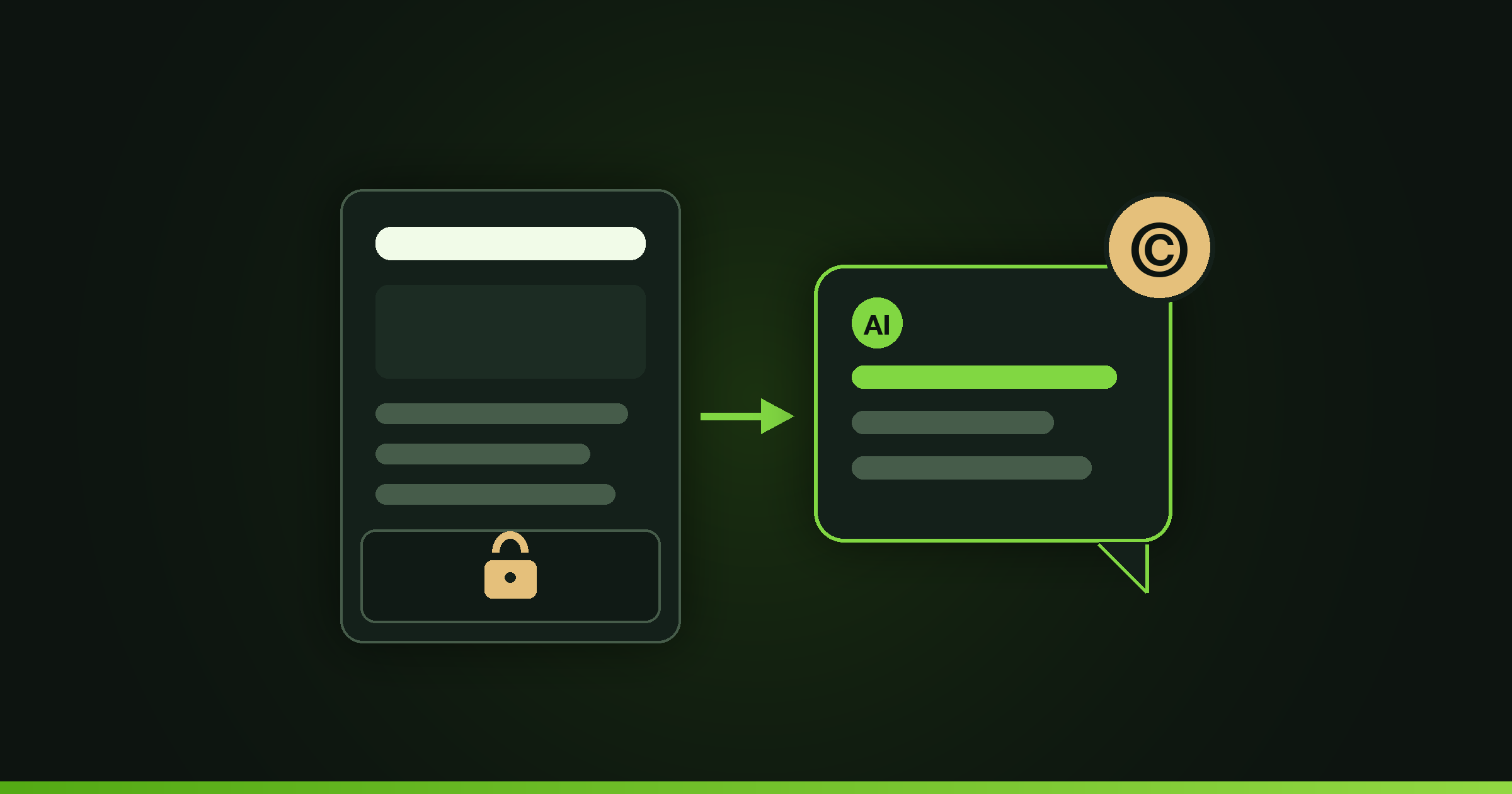
In the EU, it can. On November 3, 2026, Advocate General Maciej Szpunar advised the EU Court of Justice that a chatbot answer built on a news article may infringe the press publisher's right when it reuses the article's wording recognisably, or when the content was obtained by getting around paywalls or bot blocks. Facts alone stay free.
What is the Like Company v Google case about?
Case C-250/25 began in Hungary. Like Company, a Hungarian operator of web portals, sued Google Ireland over Gemini, claiming Gemini's models were trained on its articles and could summarise them on demand, according to the Court of Justice's own summary of the opinion. The Hungarian court referred questions to the EU Court of Justice in Luxembourg, asking whether an AI service's use of press material counts as "reproduction" and "communication to the public" under EU law.
First Advocate General Maciej Szpunar delivered his opinion on Tuesday, November 3, 2026. An Advocate General's opinion is advice, not a ruling. It is not binding, but RTÉ and TechCentral.ie both report that the court usually follows its advisers, and a judgment is expected in the coming months.
What did the Advocate General say about chatbot answers?
The central line, quoted by RTÉ, is that "the press publisher's right may be infringed in certain circumstances" when a chatbot retrieves a publisher's article and reuses it to answer a user.
Two circumstances are named in the reporting:
- Unlawful access. Where the chatbot gets the article by circumventing paywalls or other technical barriers meant to stop bots.
- Recognisable reuse. Where the answer reuses "the form of expression of that publication in a recognisable manner," in RTÉ's wording. Some coverage frames this as an answer so close to the original that the reader no longer needs to open it.
The IPKat blog, which analysed the opinion in detail, adds that in Szpunar's view the display of a chatbot answer can, depending on the circumstances, engage both the reproduction right and the making-available right, and that the test is whether the form of expression is "systematically recognisable." IPKat also reports that the opinion does not accept that publishers impliedly consent to this use simply by publishing online, and that it is "not a given" that chatbot uses fall within the exclusions for mere facts and very short extracts.
On who is responsible, IPKat summarises the opinion as holding the chatbot provider responsible for its own acts, with responsibility for users' acts assessed under the court's existing YouTube case law.
Does this cover training AI models on articles?
Mostly no. Szpunar advised the court not to answer the questions about training, because there was no evidence that Like Company's articles were used to train Gemini, TechCentral.ie reports. Where he did address training, his view was that using copyrighted material to train large language models is permitted under the EU's text and data mining exception, and IPKat adds that training is not an "online use" covered by the press publisher's right.
That distinction matters for anyone building on AI. The risk the opinion identifies is not in how the underlying model learned. It is in what your product does at answer time: fetching specific articles and presenting their content to users.
Why does this matter if you are not Google?
Because many business AI features work the same way Gemini's answers do. The technique is usually called retrieval augmented generation, or RAG: the app fetches documents relevant to a question, passes them to a model, and the model writes an answer from them. IPKat notes that chatbots such as AI Overviews and AI Mode rely on RAG alongside the model.
Plenty of small-business products do a version of this:
- A newsletter tool that summarises industry news for subscribers.
- A sales assistant that pulls articles about a prospect and writes a brief.
- A customer-facing chatbot that answers questions by searching the web.
- An internal research tool that scrapes competitor coverage.
If those features reach users in the EU and rely on press publications, the same two questions apply. How did the content get into your pipeline, and how closely does the answer track the original wording?
What should a business with a retrieval feature do now?
The opinion is not law yet, and nothing here is legal advice. But the factors the Advocate General named are concrete enough to design around, and none of them is expensive to address.
Respect access controls. Do not fetch content from behind a paywall, a login or a bot block unless you have a licence. If a site tells crawlers to stay out, your retrieval step should honour it. This is the clearest of the two routes to infringement in the reporting, and the easiest to avoid.
Summarise, do not reproduce. Prompt the model to report facts in its own words and keep direct quotes short and attributed. Copyright protects "the specific form of expression," not "mere facts," as TechCentral.ie reports. An answer that restates what happened is in a different position from one that reprints paragraphs.
Link to the source. An answer that sends readers to the original works with the publisher's interest rather than replacing it. The European Publishers Council's executive director, Angela Mills Wade, told TechCentral.ie that allowing search indexing should be kept separate from authorising AI answers that replace original reporting.
Know where your sources come from. Keep a list of the domains your feature pulls from. Licensed feeds, your own content and public-domain material carry far less risk than open web scraping of news sites.
Log what was retrieved. If a publisher ever asks, you want to be able to show which content went in and what came out.
Watch the final judgment. If the court follows the opinion, expect publishers to lean on it. IPKat also reports that Szpunar raised the possibility of turning the text and data mining exception into a compensated limitation, which would bring licensing fees into the picture.
What did Google say?
Google told RTÉ that European law's text and data mining exceptions "are vital for Europe's competitiveness and AI development," and that Gemini "learns linguistic patterns to create original outputs rather than replicating content." Google also pointed to publisher controls that let rightsholders opt out.
Code4U builds AI integrations with retrieval sources, logging and citation designed in from the start. For the other side of the same question, see Code4U's guide on whether to block AI crawlers on your site.
FAQ
Can an AI chatbot summary infringe copyright in the EU?
It can, according to a November 3, 2026 opinion by EU Advocate General Maciej Szpunar in Case C-250/25. He said the press publisher's right may be infringed when a chatbot answer reuses an article's form of expression recognisably, or when the article was obtained by circumventing paywalls or bot blocks. Reporting bare facts in new words is not protected. The opinion is advice; the court's ruling is still pending.
Is training an AI model on news articles legal in the EU?
The Advocate General said training large language models on copyrighted material is permitted under the EU text and data mining exception, but advised the court not to rule on training in this case because there was no evidence Like Company's articles were used to train Gemini. The exception requires lawful access and respects rights reservations by the owner.
Does this affect my app if I use RAG?
It may, if your app serves EU users and retrieves press publications to build answers. The opinion's concern is answer-time reuse, which is what retrieval augmented generation does. Reduce risk by honouring paywalls and bot blocks, summarising facts rather than reproducing wording, keeping quotes short, linking to sources and logging what was retrieved.
When will the EU Court of Justice rule on Like Company v Google?
Reports from RTÉ and TechCentral.ie say the court will rule in the coming months. The Advocate General's opinion is not binding, but the Court of Justice usually follows its advisers. Until then, the opinion is the clearest signal available of how EU copyright law may apply to chatbot answers built on news content.